Of Noise and Neighbors
Knock knock knock knock knock.
It’s early September 2023. I absentmindedly open the door, and standing in the hallway is a man I don’t recognize.
“What are you doing up here?” He looks at me intently. “I’m downstairs and you’ve been stomping on the floor all night.”
I realize the man lives directly below us. “I’m sorry,” I respond, though I’m not. “I had no idea I was making any noise. What sort of noise are you hearing?”
“You know what you’re doing up here. You’re stomping on the floor or having a party or something. If you don’t stop, I’ll call the police.”
I feel my face flush. I pulled a backpack out of the closet a few minutes ago, but I haven’t even been home most of the night. I know he’s mistaken, but he strikes me as legitimately upset. We continue, but the more he insists I know what I’ve done, the more I pull back. The conversation stalls.
“I’m sorry, but I don’t know what you’re talking about,” my voice wavers as I move to retreat inside. He stops the door with his hand. I push hard; he pushes harder. The struggle lasts only a few seconds. The door latches and I lunge for the deadbolt. The man leaves.
The next morning I leave home for two weeks. The encounter fades, mistakes happen.
But two days after returning home, late at night, he corners me in the hallway as I return from walking our dog. We repeat the entire script. The first encounter felt like a misunderstanding, but this one feels menacing.
I maneuver past him and overpower him a second time to retreat inside.
“STOP IT AND GO HOME,” I boom, my hands trembling.
KNOCK KNOCK KNOCK KNOCK KNOCK.
As I emerge from sleep, the police identify themselves at our front door. It’s 12:40 AM, late September, four days after the second encounter. My wife and I squint as our eyes adjust to the overhead kitchen light. An ongoing disturbance has been reported coming from our unit, an officer informs us, though I detect hesitation as they size us up. We explain the recent encounters; they explain that whatever is going on, it’s a civil matter between us and our neighbor.
My wife falls back asleep, but I lie awake, rolling the matter over and over in my head. How can we defend ourselves against this? Why do we need to? Is there no one with the authority to see what’s going on here and put a stop to it?
The next morning I visit property management. They’ve been receiving complaints about us all month. A few minutes in, the man from the hallway enters the office. He seems unassuming. If I’ve seen him prior to these encounters, I don’t recognize him. Hopeful we can still sort this out, I extend my hand to properly introduce myself.
We speak for about thirty minutes. I speculate about sources of the noise, but the man accepts no explanation that doesn’t involve malice on my part, even volunteering that he observes me and my wife from the rooftop balcony to figure out what exactly we do inside our home. My legs grow unsteady.
As the conversation spirals, a second property manager intervenes, suggesting we reconvene the next day for an impromptu noise investigation. I consent, hoping he can still be persuaded that no harm has been done to him.
The investigation demonstrates only that his landlord jumping as hard as possible on our bedroom floor fails to reproduce the noise he claims we generate constantly. As vindicating as this seems to me, no one is willing to put an outcome in writing. But something in me shifts. I can no longer see any room for misunderstanding. My thoughts turn darker, though I’m unable to piece together any coherent explanation for his actions.
POUND… POUND… POUND…
Shortly after the noise investigation, we notice an unusual pattern of noise. Three to five heavy pounds, intermittent, sometimes at 7 PM, sometimes at 3 AM. It’s a shared living space, noise isn’t unusual, but this feels heavy, angry. Dishes fall over in the kitchen. Sometimes I’m certain that the pounding is a direct response to our walking across the floor, but most of the time there is no discernible cause. I frequently wake up at night with a pounding in my head, my heart racing. Each time, I hold my breath, waiting for subsequent pounding to confirm I’ve not merely dreamt it.
I start to dread walking across the floor, understanding that a single misplaced step is enough to provoke another night of sleepless retaliation. My wife reminds me that we’ll experience the disturbances regardless, but I’ve collected enough evidence to show otherwise. When she drops a box of pasta on the floor, I feel a flash of anger at the consequences of her carelessness before quickly, silently reining in my emotions. Visiting friends in their homes, I’m surprised to discover that a heavy footstep or slammed cabinet sends my heart racing. Left with nowhere to escape, I sometimes just go to bed at 7 PM. My work suffers.
I realize I’m angry—not at the man downstairs, but at myself, because I’m not strong enough to ignore it all, because the only way I can see to fight against the world he’s constructed is first to engage with it, to be pulled further into it. I watch myself looking with suspicion around every corner and fixating on his presence, but I can do nothing to stop it. I wonder if this is how he experiences the world. Am I trapped inside some folie à deux?
Left with few options, we fill out paperwork for a restraining order. Eventually, continued pounding and another late-night visit from the police cement our determination.
The moment the temporary restraining order is served, the disturbances stop.
The court hearing at the end of November is neither pleasant nor quick. For two hours, the judge sifts through claim and counterclaim. She corners the man, pressing him, “So you confronted him as he returned from walking his dog? How could he have been making noise inside his apartment if he was outside it?"
When the judge finally announces her decision, the release is overwhelming. I accept inclusion of our animals in the protective order and stand my ground in yielding no contact information to the man. We exit the courtroom without looking at him. With everything laid bare though, we still understand nothing about why he has pursued us for three relentless months.
Knock knock knock knock.
Someone is at our door. My heart pounds, I feel lightheaded, but three weeks after the hearing, I’m still unprepared for the sheriff who now stands in the hallway. “I’m here to serve you a restraining order,” she informs me. I inspect the papers. Indeed, the man has immediately turned around and sought a restraining order against me. The sheriff sympathizes but can offer no help.
I’m stunned that—out of an abundance of caution which I suppose I can’t argue against—this temporary order has been rubber-stamped without more skepticism. Has our restraining order accomplished nothing? Is this some tit-for-tat that will continue forever? I contact potential attorneys and spend two weeks living with a friend in San Jose.
The court hearing two weeks before Christmas is anti-climactic. My wife and I arrive half an hour early, dressed in our best suits. An hour into the hearing, the judge calls our case—which she then summarily dismisses without prejudice since the man has failed to appear. Incredulous, we’re still discussing the matter with our attorney when the man finally arrives. We nod and exit the courthouse as he walks past us into the courtroom.
POUND… POUND… POUND…
My wife and I look at each other. “Is that… him?”
It’s June, and we’ve enjoyed six months of tenuous silence since the last hearing. I still see him now and then, once or twice per month in and around the building. He doesn’t interact with me and I don’t acknowledge him, but each time I think I catch the flicker of a knowing grin and feel his stare lingering on me as I walk away.
But the pounding continues, and my nerves fray as a familiar pattern emerges.
By October, the disturbances are relentless and disruptive enough that we call the police. As they leave with little more than a shrug, one officer asks where I’m from.
“Wisconsin,” I say, failing to realize this isn’t small talk.
“Well, this is Oakland.”
I reach out to our attorney, but his answer is no better. Pursuing contempt charges will cost us many times any potential fine. Fearing additional fees simply for asking, I neglect to follow up.
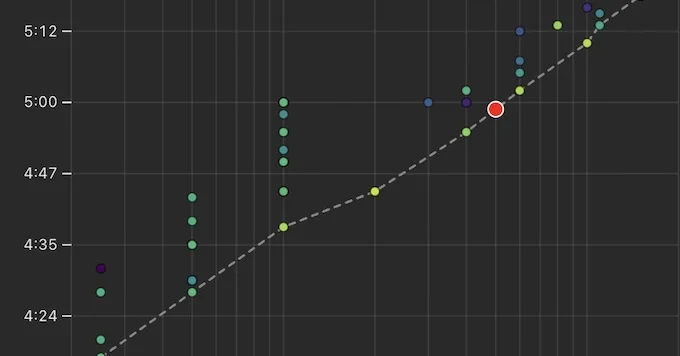
I catch myself trapping our neighbor in logical contradictions as I walk the dog. It’s a familiar place I visit in my head. I avoid it only with significant effort and moderate success. I keep collecting evidence, I track our movements as well as his disturbances in a ledger, I can’t let my guard down for even a minute.
Our neighbors ask if the pounding which keeps them up at night is the same as we hear. We confirm it is and suggest they bring their concerns to the HOA. Despite having kept the HOA up to date on the matter for over a year now, this—at long last—appears to be the secret ingredient. One household complaining about a neighbor is a dispute, but two households complaining is a liability.
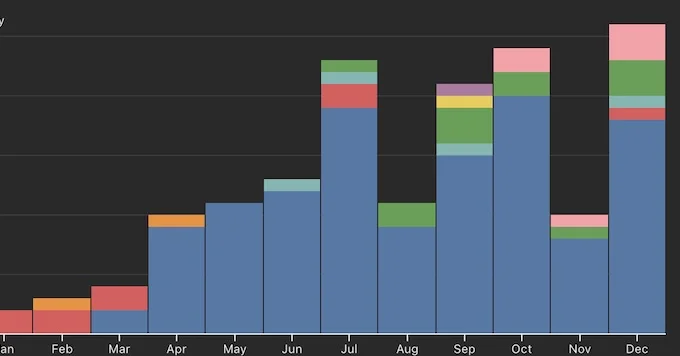
In April, many hundreds of documented disturbances later, and after property management posts the second of two notices on the man’s door (content unknown to us), the disturbances suddenly stop. With no explanation, we sleep through the night but brace ourselves for the disturbances to return.
At last, we find ourselves in the present. It’s September 2025 now, and the man still lives below us. I imagine him ten feet beneath me as I write this. But even six months after the last disturbance, I haven’t escaped his world. Each time I walk across the room or slide a chair out from the table, the attempted normalcy is deliberate and considered, always weighed against the chance of renewed conflict.
I try not to think about what two years of this has cost us. I helped a man with a walker up a short set of steps yesterday. He was late to a meeting and didn’t have time to walk around to the ramp on the opposite side of the building. He was friendly and gracious. It was a nice moment. I wished him well and expected to feel lifted, but looking inside myself, I was surprised to discover no warmth.
It’s hard to say what I was feeling in that moment. It’s easy to imagine that surely I must have been dwelling on anger, but that wasn’t it. What I felt was closer to defeat. The courts, the police, and the HOA have all done their job and shrugged. There’s nothing to make right, no score to settle, no grudge to hold. Whatever has motivated him, the man isn’t a target for my anger; the only thing I have for him is hope that he finds the peace he seeks. All I feel is smaller, more withdrawn. There’s nothing to do except to continue.
Comments